How climate change is reshaping home insurance in Canada
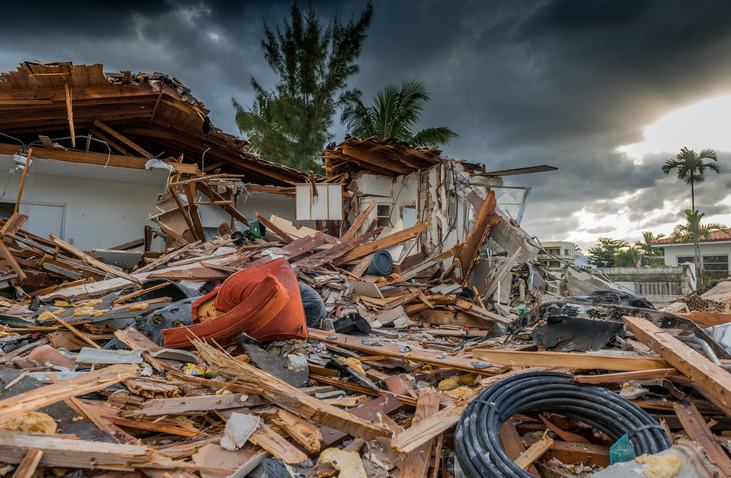
From coast to coast, homeowners are discovering just how quickly the ground beneath their coverage can shift. New underwriting restrictions, shrinking availability in high-risk zones, and premiums that keep climbing faster than inflation are becoming the norm. Understanding what natural disaster coverage does and doesn't include is now essential to protecting both your home and your finances.
Climate change is rewriting the rules of home insurance
Insurance runs on quantifiable risk, but climate change is rewriting the math. The assumptions that once underpinned property insurance no longer hold as disasters grow more frequent, more severe and more expensive. Wildfires, floods and post-tropical storms that used to be rare are now arriving in rapid succession, forcing insurers to rethink how they assess risk, set premiums and decide where they're willing to offer coverage at all.
The Insurance Bureau of Canada (IBC) reports that severe weather caused more than $3.1 billion in insured damage in 2023, the fourth-worst year on record at the time and then 2024 shattered that record entirely, with insured losses topping $8.5 billion, nearly triple the year before and roughly twelve times the annual average from 2001–2010. British Columbia's 2023 wildfire season alone cost the industry more than $720 million, its costliest insured event on record.
Here's how those shifts are showing up in the industry today:
- Risks are becoming more immediate – Hazards such as wildfire, overland flooding, wind and hail that once followed slower, longer-term are now striking more often and harder, leaving communities and insurers less time to recover between events.
- Climate models are improving – Insurers increasingly rely on catastrophe modelling and climate scenario projections down to the individual property level, which drives more targeted and sometimes stricter underwriting decisions.
- Reinsurance costs are rising – As global reinsurers absorb bigger losses from extreme weather, the cost of that protection climbs and flows straight through to homeowner premiums.
- Coverage is being reshaped – Insurers are redrawing risk maps, adding exclusions for high-risk hazards, or pulling back from especially exposed regions altogether.
Climate change's impact on home insurance in Canada is no longer theoretical. It's actively reshaping what's covered, where coverage is available, and at what cost.
Climate change is affecting home insurance in Canada
Climate risk assessment isn't just happening at the regional level anymore it's reaching the individual property. From wildfire interface zones in British Columbia to floodplains along the Red River or the Ottawa and Richelieu rivers, once-stable areas are being reclassified as high-risk, leading to higher premiums, stricter conditions and in some cases, non-renewal.
Postal code and risk zone remapping
Insurers are using increasingly precise risk-mapping technology. Homes are being reclassified into higher-risk categories based on elevation, proximity to wildland-urban interface zones and updated flood models. A reclassification can instantly raise a premium or make a property ineligible for standard coverage and in several regions non-renewals have climbed as insurers lean on this more granular, data-driven underwriting.
Wildfire and defensible space requirements
In wildfire-prone parts of British Columbia, Alberta and increasingly Ontario and Quebec, insurers are tightening eligibility and, in some cases, excluding wildfire coverage outright. To stay insured, homeowners are being asked to maintain "defensible space", a clear buffer between the home and anything that could fuel a fire.
That usually means trimming trees, clearing brush, and using fire-resistant materials on the roof, vents or siding. It can take time and money to get there, but it can also be the difference between keeping coverage and losing it.
Redrawn flood maps and a stalled national flood program
Flood mapping in Canada is a patchwork of federal, provincial and municipal efforts, and it's being updated to reflect heavier rainfall, spring melt patterns and rising water levels. Homes once considered outside a flood zone may now sit inside one, and standard home insurance in Canada typically doesn't cover overland flooding which require separate, optional flood coverage that has only been widely available from private insurers since around 2015.
The federal government committed, in its 2024 budget, to launching a national flood insurance program to help homeowners in high-risk areas get affordable coverage. As of this writing, that program has faced repeated delays, and the IBC continues to press Ottawa for details and a timeline.
Rising premiums, higher deductibles and tighter limits
As insurers price in higher climate risk, homeowners are seeing premiums rise, deductibles grow, and coverage caps and sub limits become more common. In some high-risk postal codes, these increases are outpacing inflation and straining affordability.
What you can do to protect yourself and your policy
You don't have to treat disruption as inevitable. Climate change has made coverage harder to get or keep in some areas, but there are concrete steps you can take now, before a disaster strikes or a non-renewal notice shows up.
- Review your policy's exclusions and limits – Look closely at how your policy treats overland flood, wildfire, and windstorm events, and understand how your deductible applies in each case.
- Ask for a mitigation review – Some insurers offer hazard assessments or mitigation advice that can help lower your premium or improve your property's risk classification.
- Document improvements clearly – Keep a detailed home inventory with photos, receipts and contractor records for any upgrades, so your efforts are easy to verify at claim time.
- Shop early and broadly – Don't wait for your renewal date. Look at insurers that specialize in high-risk properties or unique exposures.
- Consider provincial or specialty options – FAIR Plans and surplus lines carriers may offer coverage when the standard market won't.
- Monitor your local risk status – Stay on top of flood zone updates, building code changes and hazard map revisions that could affect your eligibility. A conversation with a VIU advisor can help you cover several of these factors at once.
- Upgrade for resilience – Storm shutters, elevated mechanical systems, and fire-resistant materials can all improve your home's resilience, insurability, and premium.
Even in a high-risk region, you still have some control. Planning ahead and documenting your preparedness can make a real difference in keeping or finding the right coverage.
Regional risk profiles across Canada
Extreme-weather insurance claims are becoming more frequent and more expensive across the country, but the risks aren't the same everywhere:
- British Columbia and the BC Interior – Wildfire risk has driven sharp increases in non-renewals and stricter defensible-space requirements, particularly after the record-breaking 2023 wildfire season.
- Alberta and the Prairies – Severe hail and windstorms, plus wildfire risk near communities like Fort McMurray, have made the region one of the costliest for insured catastrophe losses in Canadian history.
- Atlantic Canada – Post-tropical storms like Fiona (2022) and coastal flooding are pushing insurers to narrow wind and water coverage in coastal communities.
- Ontario and Quebec – Severe thunderstorms, tornadoes, and derecho-style windstorms (like the one that swept through both provinces in May 2022) sit alongside river flooding along systems like the Ottawa and Richelieu rivers.
- Manitoba and Saskatchewan – Spring flooding along the Red River and other waterways, plus increasingly intense summer storms, are raising flood risk even well inland.
Policy and regulatory responses to watch
Provincial and federal governments are increasingly stepping in to help stabilize insurance markets strained by climate-related losses. The pace and shape of these measures differ across the country, but they share a common goal: keeping coverage accessible, sustainable, and tied to long-term resilience.
- Incentives for risk reduction – Some provinces and municipalities offer rebates or credits for mitigation upgrades like storm-resistant roofing, defensible-space landscaping, and flood barriers, which can ease future rate pressure.
- Resilient infrastructure investment – Public funding for flood control, wildfire buffer zones, and updated zoning is helping stabilize insurance markets by reducing risk at the community level.
- Better federal data and mapping – Programs run through Natural Resources Canada and Environment and Climate Change Canada, along with the Canadian Centre for Climate Services, are reshaping how insurers price and underwrite risk.
What the future could look like
By 2030, the interplay of climate change, regulation and technology will likely redefine how property insurance works in Canada. Here's what's shaping up:
- Risk ratings will get more specific – Insurers are moving from postal-code pricing toward parcel-level models that weigh roof type, elevation and vegetation.
- Hyper-local modelling will affect affordability – More precise data could widen the premium gap between low- and high-risk properties.
- Parametric coverage will grow – Policies that pay out automatically based on rainfall, wind speed or temperature triggers could speed up claims and simplify recovery.
- Public-private models may expand – A national flood program, if it launches, alongside provincial FAIR Plans, could play a bigger role as some private insurers pull back from the riskiest regions.
- Mitigation will matter more – Expect more programs tying eligibility or discounts to proactive upgrades like fireproofing or flood-proofing.
- Technology will drive pricing – AI, remote sensing and real-time data are already reshaping how insurers evaluate risk.
- Climate risk could shape where people live – Insurance availability and cost may increasingly influence where Canadians choose to buy, and how property values hold up in higher-risk areas.
How to talk to your insurance company
If you're worried about a non-renewal, a big premium jump, or trouble finding coverage at all, start a direct conversation with your VIU by HUB insurance broker. A few questions to consider:
- Am I at risk of non-renewal based on where I live?
- Which hazards are excluded or capped in my policy- flood, wildfire, wind?
- Has my property's risk rating changed recently?
- What upgrades could help me keep coverage or lower my rate?
- How is climate risk affecting my premium?
- If you won't renew me, what are my alternatives? A provincial FAIR Plan, surplus lines, a specialty insurer?
In 2026, home insurance and climate change are inseparable in Canada. It's no longer just a planning issue, it's a pricing issue, an availability issue and a resilience issue. With the right information and some proactive choices, you don't have to be caught off guard.